Vera Hansen · 27 October 2026
Tracing Collaboration Friction Points in Multi-User Note Ecosystems Within Distributed Teams
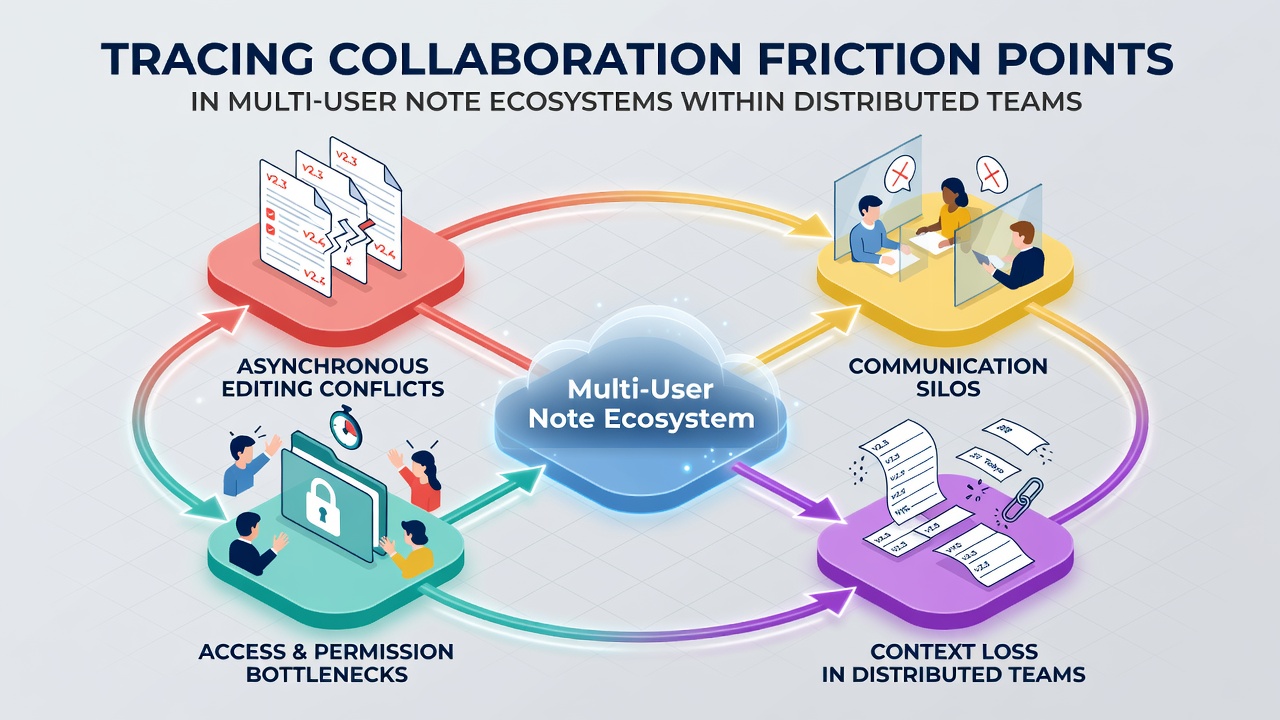
Distributed teams depend on multi-user note ecosystems to coordinate tasks across locations and time zones, yet these platforms frequently generate friction points that disrupt information flow and slow collective progress. Common tools allow simultaneous editing and threaded comments, but synchronization lags, permission conflicts, and fragmented search results create bottlenecks that compound over repeated interactions.
Core Components of Note Ecosystems
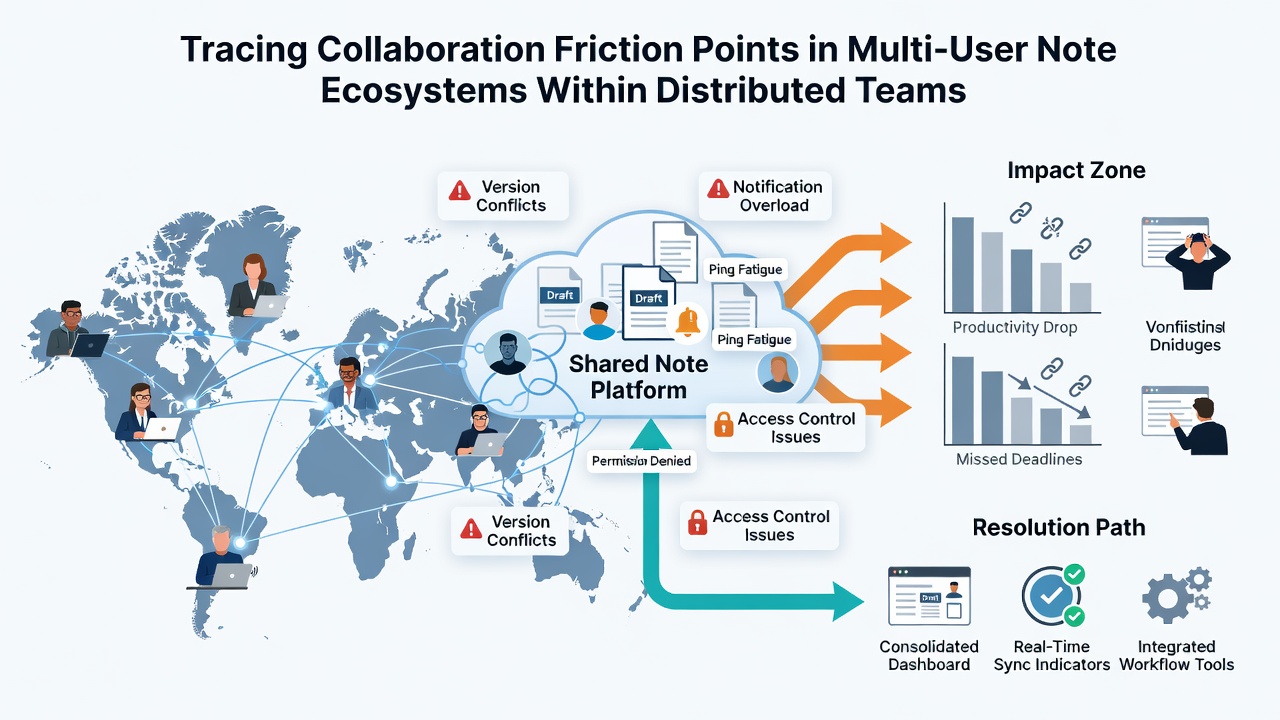
Multi-user note systems combine version histories, access controls, and notification layers into single interfaces, while teams spread across continents rely on these features to maintain shared context without daily stand-ups. Observers note that when one contributor updates a section during off-hours for colleagues in another region, the change may not propagate instantly, leading to parallel edits that require manual reconciliation later.
Research from the University of Toronto highlights how permission hierarchies often force team leads to grant temporary elevated rights, which then linger after the task ends and expose sensitive entries to unintended viewers. Such patterns appear consistently in logs from organizations that track access events over months of operation.
Identifying Friction Through Usage Data
Teams trace friction by analyzing edit timestamps, comment resolution times, and search query failures within the platform's backend records. Data shows that repeated failed searches for related entries correlate with duplicated work, because contributors cannot locate existing notes before creating new ones. Analysts examine these patterns by exporting activity streams and mapping them against project milestones to isolate where delays originate.
But here's the thing: notification overload emerges when every minor change triggers alerts across devices, prompting users to mute updates entirely and miss critical revisions. Studies indicate this behavior increases after teams exceed eight active contributors on a single workspace, as the volume of signals outpaces individual capacity to filter them.
Time Zone and Cultural Influences
Geographic distribution adds layers where one group's standard editing window overlaps poorly with another's core hours, resulting in overnight merge conflicts that surface only during the next business day. Experts have observed that language nuances in comments sometimes cause misinterpretations when translated automatically, further extending review cycles before final approval.
According to findings published in the European Commission's 2025 digital workplace survey, distributed groups report higher rates of note duplication when cross-border teams lack shared tagging conventions. The survey tracked over 4,200 participants across 28 countries and documented measurable drops in retrieval speed once note repositories surpassed 10,000 entries without standardized metadata.
Methods for Systematic Tracing
Organizations apply heat-mapping techniques to visualize which sections receive the most concurrent edits, revealing clusters where friction concentrates. These maps combine with user interviews to distinguish technical limits from behavioral patterns, such as reluctance to delete outdated drafts that clutter the main view. Automated scripts can flag entries with unresolved comment threads lasting beyond a set threshold, directing attention to stalled discussions.
What's interesting is how integration with external calendars sometimes reduces friction by aligning edit permissions with scheduled meetings, ensuring only relevant participants hold write access during specific periods. Teams that implement such timed controls document fewer version clashes in their monthly audits.
Impacts Observed in October 2026 Projections
Projections released ahead of October 2026 industry forums suggest that as hybrid work models stabilize, note ecosystem friction will shift toward integration challenges with emerging AI summarization features. Early adopters already report that automated summaries occasionally omit context from older comments, creating gaps that new members must reconstruct manually. Those who've studied usage trends expect continued growth in audit log volume, requiring dedicated roles focused solely on friction detection rather than content creation.
Conclusion
Effective tracing of collaboration friction points demands ongoing review of both quantitative logs and qualitative feedback loops within multi-user note ecosystems. Teams that map permission flows, monitor search failures, and adjust notification settings based on actual usage patterns achieve smoother coordination across distributed locations. Continued refinement of these practices supports clearer information exchange without introducing new bottlenecks as platforms evolve.